
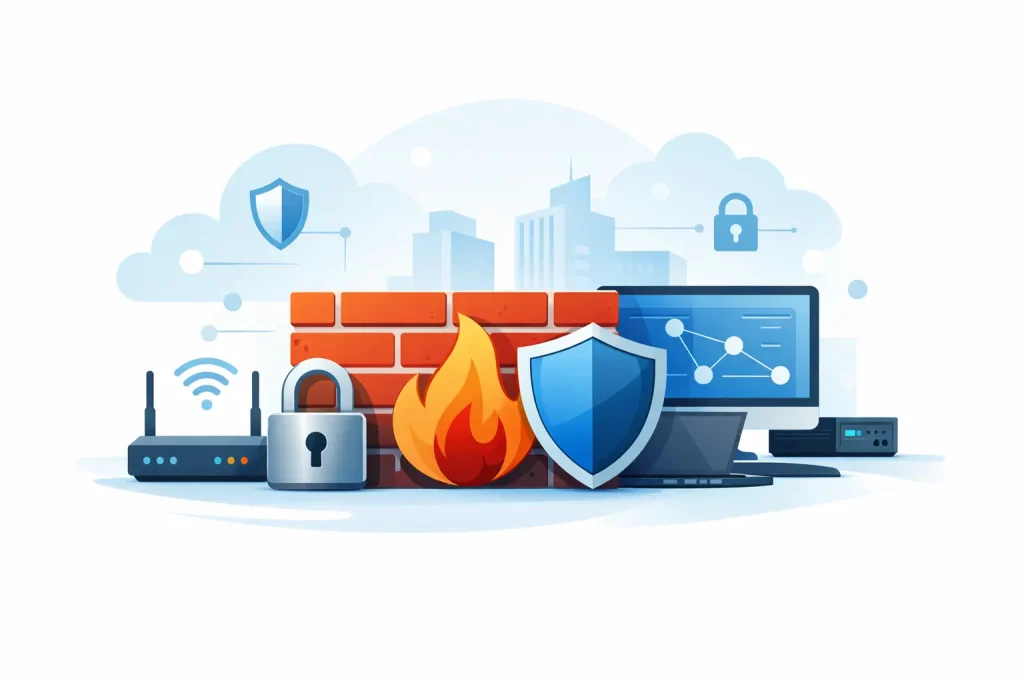
A small office usually notices its firewall only when something goes wrong – a ransomware alert, a failed VPN connection, or a sudden slowdown nobody can explain. That is precisely why choosing the best small office firewall solutions deserves more attention than it often gets. The right firewall is not just a box at the edge of the network. It is a control point for security, remote access, web filtering, traffic visibility, and business continuity.
For smaller organisations, the challenge is rarely a lack of options. It is deciding what is genuinely necessary. Some offices need strong content filtering and simple site-to-site connectivity. Others need reliable remote user access, better reporting, or tighter control over cloud applications. The best choice depends on headcount, internet usage, compliance expectations, and whether someone is actively managing the environment.
What small offices should expect from a firewall
At a minimum, a business-grade firewall should do far more than basic network address translation and port forwarding. A small office should expect stateful inspection, intrusion prevention, VPN capability, traffic monitoring, and policy-based control over what users and devices can access.
In practice, the more useful features are often the operational ones. Clear alerts, readable reporting, sensible firmware management, and dependable vendor support matter just as much as raw throughput. A firewall can look impressive on a datasheet and still be a poor fit for a small office if everyday administration is awkward or if licensing becomes expensive after the first year.
There is also a wider point here. Firewalls work best when they are part of a managed security approach. If rules are never reviewed, firmware is delayed, or remote access is left too open, even a strong platform becomes a weak control.
Best small office firewall solutions to consider
1. Fortinet FortiGate
FortiGate appliances are widely respected for offering strong security capabilities without pushing small organisations into enterprise-level complexity. For offices that want proper unified threat management, application control, web filtering, VPN, and good performance, FortiGate is usually near the top of the shortlist.
Its main strength is depth. You can start with a relatively straightforward deployment and still have room to introduce more granular security policies later. That makes it a sensible option for businesses expecting growth or needing a platform that can support a more mature security posture over time.
The trade-off is administration. FortiGate is powerful, but it benefits from experienced setup and ongoing oversight. Small offices without internal IT support may not get the best from it unless a managed provider is involved.
2. Sophos Firewall
Sophos is a strong choice for small offices that want security features presented in a more approachable way. It has a reputation for solid web control, synchronised security options when paired with Sophos endpoint products, and a management experience that many smaller organisations find practical.
This can work particularly well where the business wants better visibility of user activity, simpler policy enforcement, and consistent protection across office and remote users. It is also a sensible option for organisations trying to tighten security without creating an administrative burden.
The main consideration is ecosystem fit. Sophos tends to be most compelling when other Sophos tools are already in use or planned. If not, its advantages may be less pronounced compared with competing platforms.
3. Cisco Meraki MX
Meraki appeals to businesses that prioritise ease of management, cloud administration, and predictable oversight across one or more sites. If a small office has limited technical resource and values central visibility, the MX range can be very attractive.
Its dashboard is one of its strongest features. Administrators can review usage, apply policies, and monitor health without wrestling with a complex interface. For distributed businesses, or offices with hybrid working patterns, that simplicity has real operational value.
The compromise is cost and control. Meraki licensing is ongoing, and some technical users find it less flexible than more traditional firewall platforms. It suits organisations that prefer simplicity and managed visibility over deep low-level customisation.
4. SonicWall TZ series
SonicWall has long been present in the small and mid-sized business firewall market, and the TZ series remains a practical option for offices that need established security features and reliable perimeter protection. It offers gateway security, VPN functionality, content filtering, and inspection features that fit many common office environments.
It is often considered by organisations that want a conventional appliance-led approach without moving too far into either enterprise complexity or consumer-grade simplicity. In the right environment, it provides a good balance between feature set and affordability.
That said, the user experience and licensing structure can feel less straightforward than some rivals. SonicWall is usually best where there is either in-house familiarity or external IT support to handle configuration cleanly.
5. WatchGuard Firebox
WatchGuard is well suited to small offices that want capable security controls with a strong emphasis on visibility and policy management. Its appliances typically include the features most small businesses need, including secure remote access, traffic inspection, web filtering, and reporting.
One of its practical advantages is that it can strike a sensible middle ground. It is neither stripped back nor excessively demanding, which can make it suitable for organisations that need dependable security without a heavy administrative footprint.
As with most subscription-based firewall platforms, the long-term value depends on the licence bundle selected. A low entry price can look less attractive if the business later needs add-ons that were not included at the outset.
6. Netgate with pfSense Plus
For technically confident businesses, or those working with an IT partner comfortable in open-source-led environments, Netgate appliances running pfSense Plus can offer significant flexibility. This option can deliver advanced routing, VPN, segmentation, and policy control without the commercial structure of some mainstream vendors.
Its appeal is clear where granular control matters and budget discipline is a factor. Smaller offices with unusual network needs sometimes get more tailored results from pfSense than from an off-the-shelf vendor template.
The limitation is support and simplicity. While commercially supported Netgate devices improve the picture, this is still better suited to organisations that understand what they are adopting. It is rarely the right choice for a business that wants a hands-off platform with minimal management input.
7. Ubiquiti UniFi Gateway and Next-Gen options
Ubiquiti products are often chosen by smaller organisations because they are accessible, well integrated with switching and wireless, and relatively easy to manage through a unified interface. For a small office already using UniFi networking, their gateway and next-generation security options can be a logical extension.
This approach can work well in straightforward environments where the priority is clean management, sensible segmentation, and cost control. It is often more capable than consumer hardware and easier to oversee than some traditional firewall vendors.
The caveat is that security depth may not satisfy every requirement. For businesses with stricter compliance needs, more advanced threat inspection demands, or a higher risk profile, a dedicated firewall platform from a specialist security vendor is often the safer choice.
How to choose between the best small office firewall solutions
The right decision usually starts with operational reality rather than brand preference. A ten-person office with cloud-based systems and light VPN use does not need the same setup as a regulated business handling sensitive client data across multiple locations.
Internet speed matters because security inspection affects throughput. User count matters because remote access, device growth, and traffic visibility all become more complex as the business expands. Support model matters because a strong firewall still requires updates, policy reviews, backups, and incident response.
There is also the question of how much control the business genuinely wants. If the office has no in-house IT capability, a platform with excellent central management and straightforward vendor support may be more valuable than one with every advanced feature available. If there is a managed service relationship in place, the business can sensibly choose a more capable firewall knowing it will be looked after properly.
Common mistakes when buying a firewall
One common mistake is buying purely on appliance price. A cheaper unit can become more expensive over three years once subscriptions, support renewals, and feature licensing are included. Another is sizing only for today. If remote working, voice traffic, cloud applications, or additional users are likely within the next 12 to 24 months, the firewall should be chosen with that in mind.
It is also easy to overestimate what the device will solve on its own. A firewall is important, but it is only one layer. Poor password practices, unpatched endpoints, and weak Microsoft 365 controls can still create serious risk even with a well-configured perimeter.
When managed support makes more sense than self-management
For many small offices, the real issue is not selecting from the best small office firewall solutions. It is making sure the chosen platform is configured correctly, monitored consistently, and reviewed as the business changes. Rules tend to accumulate, temporary access becomes permanent, and firmware updates get postponed when nobody owns the task.
That is where managed oversight often adds more value than the hardware decision itself. A capable firewall with disciplined management is usually safer than an advanced platform running on default assumptions. For organisations that rely on external IT expertise, this turns the firewall from a one-off purchase into a maintained business control.
If your office is reviewing firewall options, focus on fit, manageability, and ongoing support rather than headline features alone. The best result is not the most complex platform. It is the one that quietly does its job, supports the way your business works, and reduces risk without creating another system nobody has time to manage.