

Small businesses often run on remarkable energy and very limited spare time. Teams move quickly, people wear several hats, and every hour of disruption hurts. That is exactly why small business IT support matters. It is not about adding complexity or enterprise theatre. It is about giving a growing business reliable technology, sensible protection, and access to expertise without the overhead of building a large internal IT department.
In many SMEs, technology evolves faster than process. A laptop is bought in a rush. A new app is introduced because it solves an immediate problem. Accounts are created, but never reviewed. Passwords live in too many places. Backups are assumed to be working. None of this happens because owners are careless. It happens because customer work comes first. Small business IT support helps tidy that reality into something more secure, efficient, and scalable.
Why SMEs need specialist support
Small businesses have different needs from large enterprises. Budgets are tighter, internal expertise is usually limited, and technology decisions must be closely tied to practical return. Support for an SME should therefore be commercially sensible as well as technically sound. The provider should help standardise what matters, simplify where possible, and avoid recommending heavyweight solutions that create more cost than value.
At the same time, smaller companies are not sheltered from risk. They still face phishing, ransomware, accidental data loss, hardware failure, staff turnover, and internet outages. In some ways they are more exposed because they have less redundancy and less time to recover.
The core services small businesses usually need
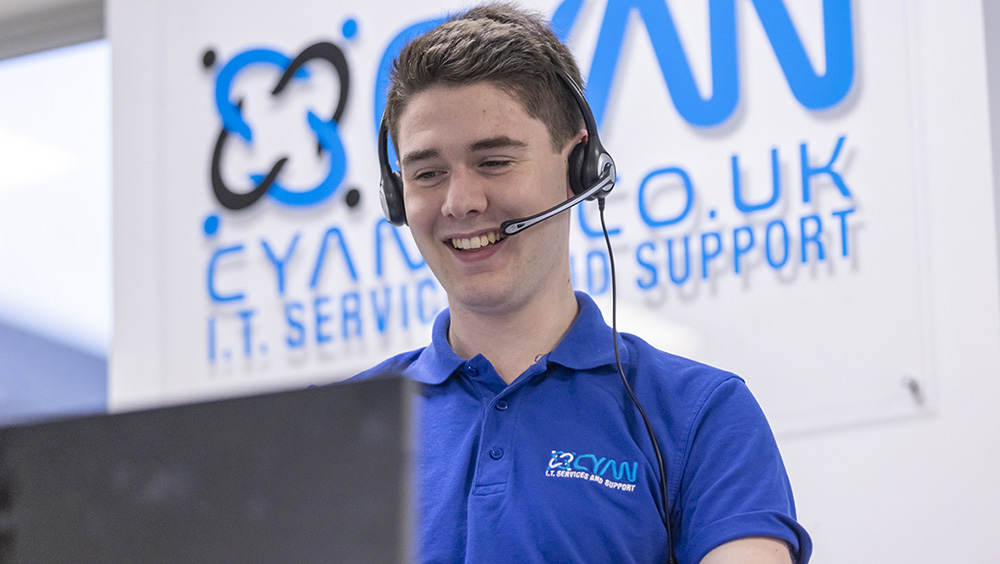
For most SMEs, the essentials include responsive user support, device setup, Microsoft 365 or Google Workspace administration, patching, security controls, backup oversight, broadband and Wi-Fi troubleshooting, onboarding, offboarding, and practical supplier coordination. Some businesses also need support for industry applications, card payment devices, cloud telephony, or stock and booking systems. The best support model is one built around real working needs rather than a generic checklist.
A good provider also understands proportion. Not every small business needs complex infrastructure, but every small business does need reliable logins, protected devices, sensible access control, and a clear route to help when issues arise.
Cost control and predictable budgeting
One of the biggest advantages of outsourced small business IT support is predictability. Instead of waiting for failures and then paying whatever it costs to recover, the business can move toward a clearer monthly model. That usually includes support, maintenance, monitoring, and agreed project work when needed. Predictable budgeting is especially valuable for small companies because surprise spend can derail hiring plans, marketing activity, or stock purchases.
The real savings, however, often come from avoided downtime. A team of ten people losing half a day to access issues or failed laptops creates a much bigger cost than the repair bill alone.
Keeping security simple and strong
Small businesses do not need a maze of security tools to improve resilience. They need a few essentials done consistently well. Multi-factor authentication should be enabled. Devices should be patched. Antivirus or endpoint protection should be managed centrally. User access should be reviewed. Backups should be monitored and tested. Staff should know how to spot suspicious emails and what to do if something looks wrong.
The role of a support partner is to make these controls practical. Security that constantly interrupts work will be bypassed. Security that is designed around the way the team actually works is much more likely to stick.
Helping growth without causing chaos
As SMEs grow, they often hit a tipping point where the informal approach stops working. New joiners need repeatable setup. Shared folders become messy. More software means more passwords and more licences. Owners need better oversight. Support should help the company cross that threshold without grinding everything into bureaucracy.
That might mean creating a proper onboarding checklist, standardising laptops, moving files into a better-structured cloud environment, documenting suppliers, or separating personal and business devices. These are not glamorous projects, but they remove friction and prepare the business for the next stage.
What a small business should expect from its provider
When reviewing an existing provider or selecting a new one, it helps to ask practical questions. What response times are guaranteed for critical incidents? What is included in monitoring and patch management? How often are backups checked and tested? Who owns documentation? What happens during a cyber incident? Is there on-site support as well as remote support? How are recurring issues analysed and reduced? The quality of the answers usually reveals the quality of the service.
The importance of communication and trust
Small teams feel support quality very directly. They notice whether calls are returned, whether explanations are clear, whether engineers understand the business, and whether recurring issues are actually reduced. Trust matters because support providers often handle sensitive systems and business-critical data. Owners need to know that advice is honest, priorities are sensible, and problems will not be buried under jargon.
Final thought
The best small business IT support arrangements create calm. Systems are more reliable, users are more confident, leadership has clearer visibility, and technology decisions become less reactive. Over time, that calm compounds into better uptime, stronger security, smoother change, and a business that can focus on growth rather than constant troubleshooting.