

IT Support in Maidstone matters because local businesses need more than a generic remote helpdesk. They need support that understands the pace of local operations, the mix of office and hybrid working, the need for on-site attendance when required, and the commercial pressure to keep teams productive. Whether a company is running from a single office, multiple sites, a warehouse, a clinic, or a professional services environment, dependable support turns technology from a daily worry into a steady operational asset.
For many Maidstone businesses, technology is no longer tucked away in a server cupboard. It sits everywhere: cloud files, mobile devices, broadband links, meeting-room screens, identity platforms, line-of-business software, printers, firewalls, laptops, and remote access tools. That means support needs to be broad, responsive, and disciplined. The provider should solve immediate issues, reduce repeat faults, and help leadership make sensible decisions about security, resilience, and future investment.
Why local support still matters in Maidstone
Remote support is efficient and often the fastest way to resolve user issues, but local presence still matters. for businesses in Maidstone that need dependable day-to-day support and practical advice, there are times when an engineer on site is the quickest route to restoring service. Hardware failures, office moves, cabling issues, Wi-Fi dead zones, new workstation setups, printer problems, firewall swaps, and meeting-room changes often benefit from hands-on support. A local provider can usually respond with better context and less delay.
Just as importantly, a nearby support company is more likely to understand the practical environment in which the business operates. That local familiarity can improve communication, project planning, and accountability.
The services businesses typically need
A strong regional IT support service usually includes helpdesk support, monitoring, patching, Microsoft 365 administration, backup oversight, network and Wi-Fi troubleshooting, hardware advice, onboarding and offboarding, endpoint security, and supplier liaison. Many local businesses also need support for telephony, remote access, printers, and cloud file sharing.
The provider should be able to flex between remote efficiency and on-site practicality. That balance is often what businesses value most. Quick remote fixes for routine issues, backed by in-person help when the situation genuinely requires it.
Supporting productivity for growing teams
Productivity problems are rarely dramatic on paper. A slow laptop, unreliable wireless coverage, broken email signatures, delayed file synchronisation, and repeated password lockouts can each seem minor. Together they create a steady drag on output. Local IT support should reduce that drag. The best providers identify recurring faults, standardise devices, simplify user environments, and give staff a clear support route.
That matters especially for businesses that are growing. Every new hire adds accounts, devices, permissions, and support demand. Without a structured support model, growth can create technical clutter very quickly.
Cybersecurity and resilience in the local business landscape
Regional businesses face the same cyber threats as national firms: phishing, credential theft, ransomware, accidental deletion, and supplier-related exposure. Good local IT support should therefore include a serious security baseline. Multi-factor authentication, patching, endpoint protection, secure offboarding, backup testing, and user awareness are not luxury extras. They are part of modern business hygiene.
Resilience also matters beyond cyber incidents. Broadband outages, failed switches, power events, and hardware faults can all interrupt operations. A support company should help businesses reduce single points of failure and plan recovery sensibly.
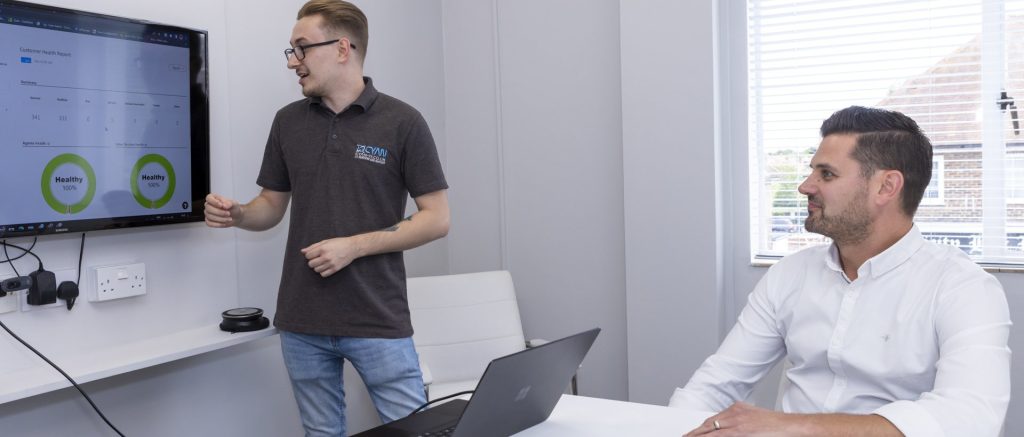
The value of strategic advice
The right provider does not only fix faults. They also advise on lifecycle planning, software standardisation, cloud use, internet resilience, documentation, and future projects. That strategic layer is often what separates a local break-fix supplier from a true support partner. Businesses need somebody who can explain what deserves investment now, what can wait, and how different choices affect security and scalability.
Questions to ask a local IT support company
When reviewing an existing provider or selecting a new one, it helps to ask practical questions. What response times are guaranteed for critical incidents? What is included in monitoring and patch management? How often are backups checked and tested? Who owns documentation? What happens during a cyber incident? Is there on-site support as well as remote support? How are recurring issues analysed and reduced? The quality of the answers usually reveals the quality of the service.
For a regional provider, it is also worth asking how local coverage works in practice. Do they offer planned on-site visits? What is the response expectation for a business of IT Support in Maidstone? How do they handle office relocations, hardware rollouts, and urgent physical faults? Clear answers matter.
Why relationships matter
Local support is often at its best when it feels like an extension of the business rather than an anonymous vendor. The team knows the office layout, understands the main systems, recognises common user issues, and can speak to decision-makers without layers of friction. That relationship improves both speed and trust, which becomes especially important during major incidents or periods of change.
Final thought
IT Support in Maidstone should deliver more than technical firefighting. It should give businesses responsive help, practical local coverage, stronger security, and a clearer technology path. When that happens, systems become more dependable, users become more confident, and leadership gains a partner who understands both the local context and the wider technology picture.